PA Speakers: Choosing by Setting, Not by Label
The room chooses the speaker. This guide matches speaker forms to settings — rooms, corridors, halls, venues and open areas — without stating a size, power or coverage figure as a specification.
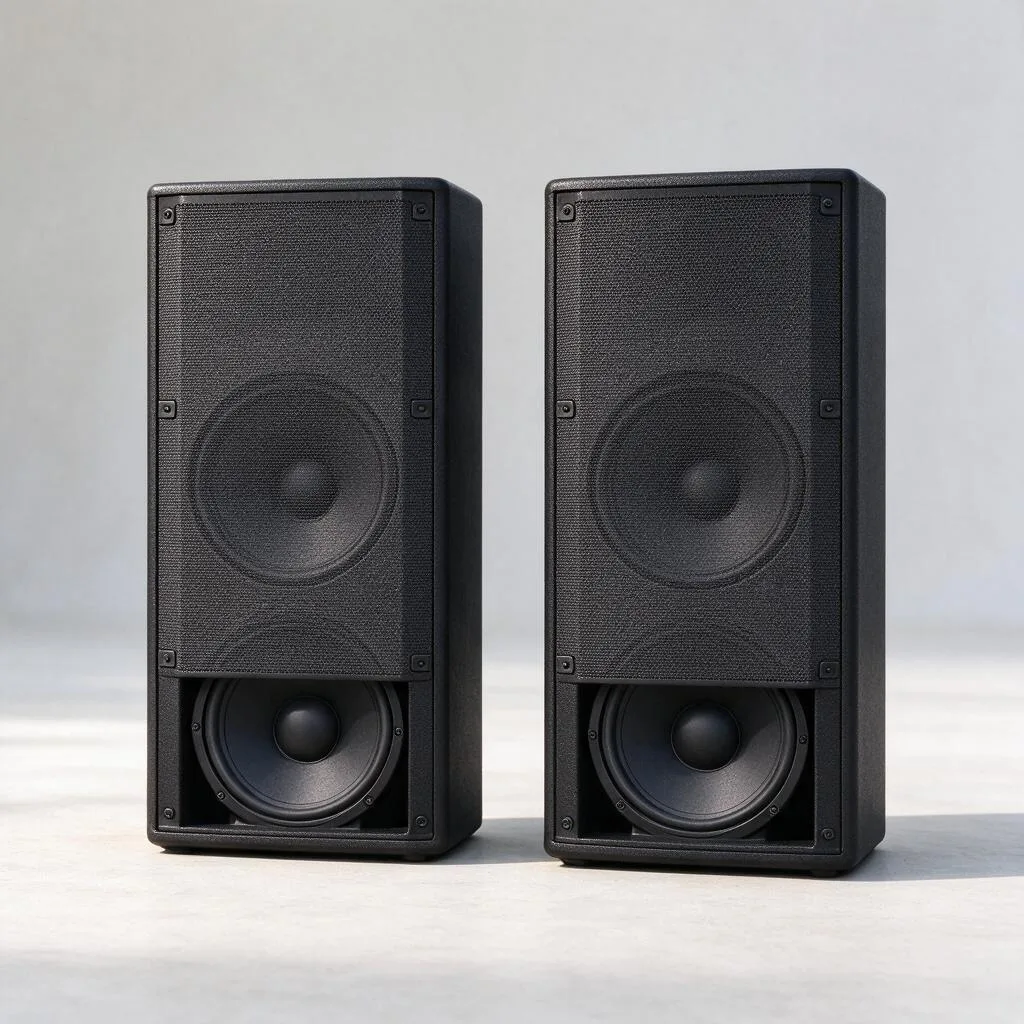
Why setting comes first
Speaker labels describe shapes, not rooms. A ceiling speaker, a wall speaker, a horn speaker, a line-array speaker and a pendant speaker are five shapes, and each shape suits some settings and not others. A buyer who starts from the label risks ordering a shape that fights the room. A buyer who starts from the setting — the room, the ceiling, the audience area — narrows the shape naturally.
Setting means the physical facts of the space: ceiling height and type, wall material in plain terms, room length and shape, seating layout, and whether the space is indoors or outdoors. Those facts, plus the amplifier and mixer in use, shape the speaker choice. The label comes last, as a summary of a choice the setting already made.
Rooms and ceilings
Low-ceiling rooms with even seating suit ceiling speakers, which spread sound from above across the room. The ceiling itself matters: its height, its type in plain terms, and whether the space above it is open all shape what can be mounted and how many units a room needs. Size phrases from a brief should be stated in the inquiry as requirements to be matched, not taken as stocked sizes from a category page.
High or open rooms suit pendant speakers, which hang from the ceiling by a cable and bring the sound source down toward the listeners. Atriums, open halls and rooms with very high ceilings are the settings buyers name most often for this form. The drop length and the hanging point are inquiry details, set by the room rather than by the category.
Rooms with high or unsuitable ceilings, and corridors where sound must travel along a length, suit wall speakers, which direct sound into the room from one side and stay reachable for adjustment. The wall type, the distance the sound must travel and the listener positions all belong in the inquiry.
Large rooms, venues and open areas
Large rooms, halls and venues suit line-array speakers, hung or stacked in a vertical column to cover a wide audience area from one array, and column speakers, tall and slim, for halls and long rooms where the column shape fits the wall or stage edge. Venue planning starts from length, seating layout and array position, stated in plain terms.
Outdoor areas, yards and open spaces suit horn speakers, which direct sound in a focused beam over distance. Outdoor use is described here only as the buyer's stated environment. This guide makes no claim about resistance to rain, dust, heat or any other condition, and states no distance or coverage figure as a specification. State the area, the mounting point and the environment in the buyer's own words in the inquiry.
Mixed spaces — a building with rooms, corridors and a yard, for instance — usually need more than one form. The speaker system page on this site covers speakers planned as a set for a room, floor or building, and the inquiry for a mixed space should describe each area separately, so each area gets the form its setting asks for.
Questions to ask before ordering
From setting to a brief
A brief built from settings reads area by area: this room with this ceiling and this seating, that corridor with that length, that yard with that mounting point. Each area names its speaker form, and the forms together make a system. If you receive a quote, compare it with your requirements and record any differences.
Send the item list and quantities for a quote, and agree MOQ and lead time in writing before placing an order. Certificates are available upon request.
One form per area
Mixed spaces reward area-by-area thinking. A building with a hall, a corridor, a reception area and a yard rarely suits a single speaker form across all four areas. The hall may ask for a column or line-array form, the corridor for wall speakers, the reception area for ceiling speakers, and the yard for horn speakers. One form per area, chosen by each area's setting, beats one form for the whole building.
Area-by-area briefs also make comparisons easier. When each area names its form, its mounting point and its listener area, the buyer can see which area drives the cost and which area could change form without harming the whole system. A single-form brief hides those trade-offs behind one line.
When the room changes the plan
Rooms change after the brief is written: a hall gains seating, a corridor gains a partition, a yard gains a canopy. Each change can move a speaker form from fitting to unfitting, and the inquiry should be updated when the room changes rather than carried forward unchanged. A brief is a description of a space at a moment, and it should track the space it describes.
Ceiling changes deserve special attention, since ceiling speakers and pendant speakers both depend on the ceiling. A ceiling that gains panels, beams or a new height changes what can be mounted and where the sound source sits. Name ceiling changes in the inquiry revision, and ask whether the speaker form still fits the new ceiling.
Outdoor changes deserve the same treatment. A yard that gains a structure, a wall or a covered area changes the mounting points and the paths sound takes. State the changed area in the buyer's own words, and ask whether the horn speaker placement still serves the new layout.
Also name the listening positions for each area: where listeners sit or stand, how far they are from the nearest speaker in plain terms, and whether any listener area sits behind a partition, a pillar or a balcony front. Listening positions shape speaker placement more than room labels do, and a brief that names them lets each area's form be matched to its listeners instead of to its name.
If you receive a quote, compare it with your requirements and record any differences.
Related pages
Send an inquiry
State your order quantity and required delivery date in your inquiry, and agree MOQ and lead time in writing before you place an order.