Mixers: What to Ask Before Ordering
A mixer is a control point, not a box count. This guide walks through sources, channel needs and the three mixer forms, and ends with the questions to carry into the inquiry.
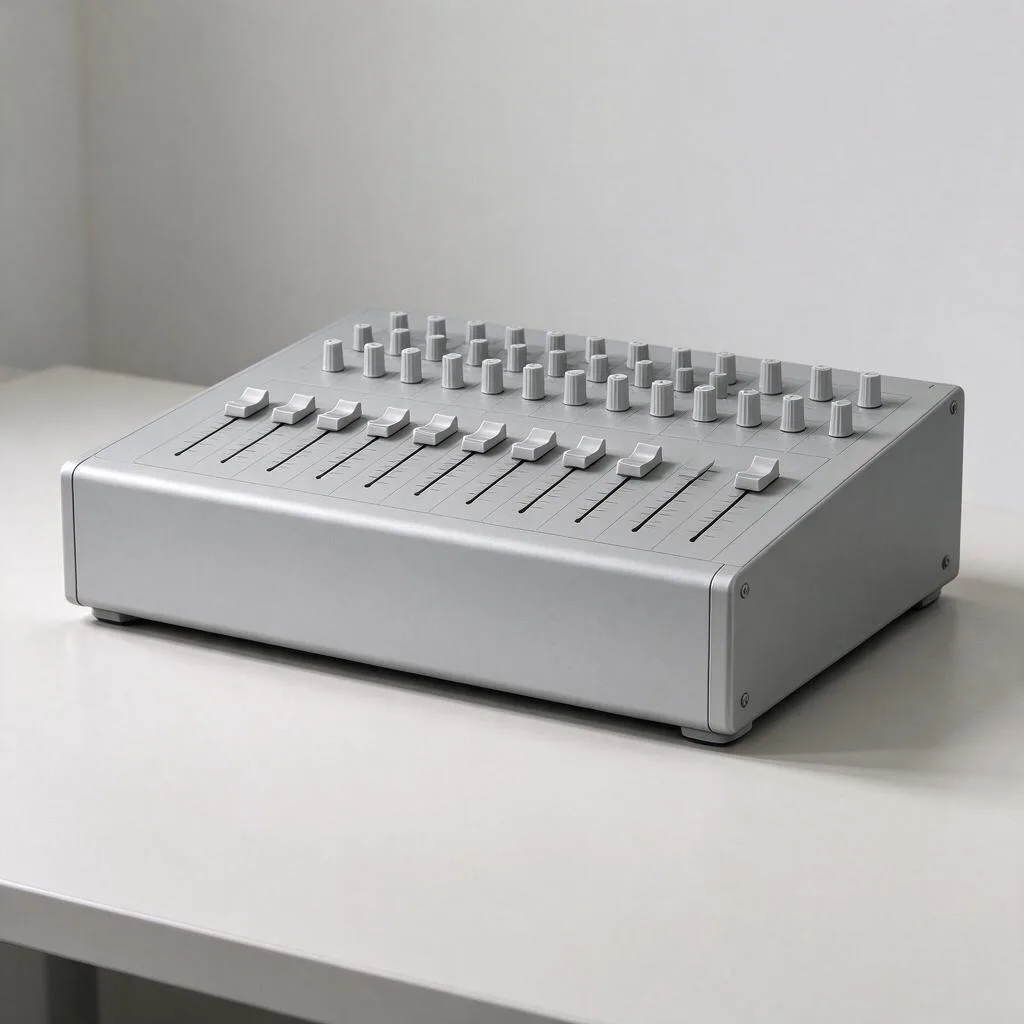
What a mixer does in a PA system
A mixer combines sources into one feed. Microphones, playback units and other inputs enter the mixer, the operator balances them, and one mixed signal leaves for the amplifier and speakers. Multiple sources need a way to combine and control their signals; this may be built into another device or provided by a separate mixer.
Mixer choice therefore starts from the source list, not from the mixer. Count the sources, name them, and note which ones change between events. A fixed source list and a changing source list point to different forms, and the inquiry should say which pattern applies.
Sources and channel needs
List every source: each microphone, each playback unit, each instrument or line input the system must handle. Counts matter here, because the mixer must have room for every source at once, with a margin for a guest microphone or an extra playback unit on the day. State the source list with counts in the inquiry.
Channel counts appear in this guide only as buyer-described needs. If a brief names a channel count, state it in the inquiry as a requirement to be matched, and ask which mixer lines fit that brief. This guide states no channel, size or power figure as an available specification, and a channel phrase from a search should be treated as a requirement, not as a stocked configuration.
Also name the outputs: the amplifier and speakers the mixer must feed, and whether separate feeds are needed for different areas or for recording. Outputs shape the brief as surely as inputs do, and a mixer brief that names only inputs is half a brief.
Digital, analog and powered forms
Digital mixers manage sources and settings from a digital control surface, which suits setups where the source list changes between events or where settings must be recalled for repeat use. Venues, halls and event spaces with varied programmes are the settings buyers name most often for this form.
Analog mixers give each source its own physical controls on the panel — knobs and faders a hand can reach without menus. They suit straightforward setups, operators who prefer direct control, and rooms where the source list rarely changes. A fixed source list suits this form well, and the inquiry should say so when it applies.
Powered mixers combine mixing and amplification in one unit, which suits compact setups where a separate amplifier is not wanted: a small hall, a portable rig or a room where the whole system must stay simple. The pairing of powered mixer and speakers is the heart of that brief, and the inquiry should name the speakers the unit must drive.
Control and operation
Name who operates the mixer, and how often the setup changes. A system operated by one trained person differs from a system operated by rotating volunteers, and a system reconfigured daily differs from a system set once and left alone. The operator pattern shapes the form choice, and it belongs in the inquiry alongside the source list.
Also name the physical setting: where the mixer sits, how much space it has, and whether it must move between rooms. A mixer that travels needs a different brief from a mixer that stays in one control position, and the inquiry should name the difference.
Questions to ask before ordering
Counting sources honestly
Source lists grow. A brief written for two microphones and one playback unit can, by event day, need a guest microphone, a second playback unit and a line input for a laptop. Counting honestly means counting the sources the event actually uses, including guests and extras, and adding a margin for the source nobody planned. A mixer brief with no margin forces a last-minute compromise.
Count outputs with the same honesty. A mixer that feeds one amplifier and one speaker set is one brief. A mixer that feeds separate areas, or a recording feed alongside the live feed, is another. Name every output in the inquiry, and the mixer brief covers the whole signal path instead of only its input side.
The operator question
Operator skill shapes mixer choice as surely as source count does. A trained operator can manage a digital surface with scenes and recalled settings. A rotating group of volunteers may do better with direct physical controls, where every source has a knob or fader a hand can reach. Name the operator pattern in the inquiry, and the form choice follows from it.
Operator changeover deserves a line of its own. A system handed between operators mid-event needs settings that survive the handover, while a system run by one person all day needs no such provision. State the handover pattern in plain terms, and ask which form serves it.
Also name the spares and extras pattern in plain terms: whether spare inputs must stay free for guests, whether a spare microphone must sit ready beside the mixer, and whether the setup must absorb one more source without rewiring. A mixer brief with spare capacity named in advance survives event-day changes, while a mixer brief filled to the last input leaves no room for the change every event eventually brings.
From questions to a brief
A brief built from these questions names sources, channels as requirements, outputs, form, operator and position. If you receive a quote, compare it with your requirements and record any differences.
Send the item list and quantities for a quote, and agree MOQ and lead time in writing before placing an order. Certificates are available upon request.
If you receive a quote, compare it with your requirements and record any differences.
Related pages
Send an inquiry
State your order quantity and required delivery date in your inquiry, and agree MOQ and lead time in writing before you place an order.